Sandy soil can be pleasant to dig and quick to drain. In a dry spell, those same qualities can make young plants demanding to establish.
Build useful structure over time
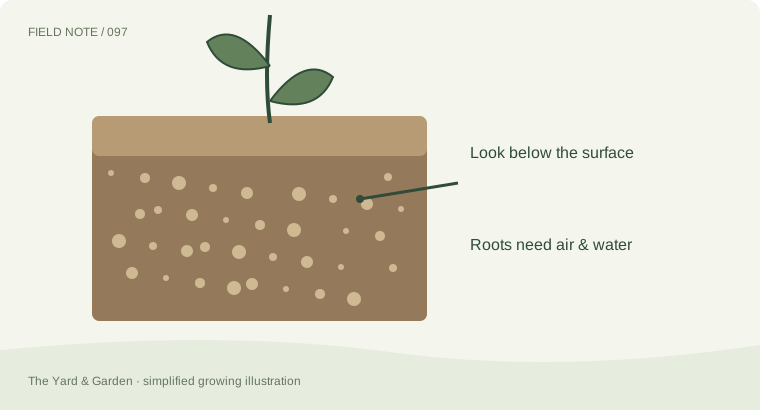
Appropriate additions of mature organic matter can improve water and nutrient retention. Use local guidance and soil-test results rather than adding large quantities of every amendment available. A suitable surface mulch can reduce evaporation and protect bare ground.
Water new plants so the root area receives a useful amount, then check how quickly it dries. Repeated tiny surface splashes may leave deeper roots short of water. At the same time, excessive application can move water and nutrients beyond a small root system.
Match the planting to the site
Choose plants suited to a free-draining environment, while providing establishment care. Shade, wind, and local rainfall affect the result as much as the word sandy.
Record where the soil dries fastest and which plants perform reliably. Do not judge the whole garden from a single sample near a building or old construction area. The aim is not to erase the soil's character but to make its behavior predictable enough that plant choice, watering, and nutrient management can work together without constant emergency intervention.
Further guidance & source notes
- University of Maryland Extension: Growing media for containers
- Royal Horticultural Society: Caring for soil
These are background resources, not an endorsement of this website. Regional instructions and the needs of your plant take priority.