An inexpensive probe can feel reassuring because it supplies a definite answer. Different media, salt levels, probe contact, and positions can affect that answer.
Compare before trusting
Read the device instructions and try it alongside direct moisture checks in a pot you know. Insert it carefully where roots will not be repeatedly damaged. Compare readings at appropriate locations rather than taking one measurement near the rim as the whole story.
Clean and store the probe as directed. Do not assume it is designed to stay permanently in the pot, or that its scale provides a universal watering threshold for every species.
Investigate contradictions
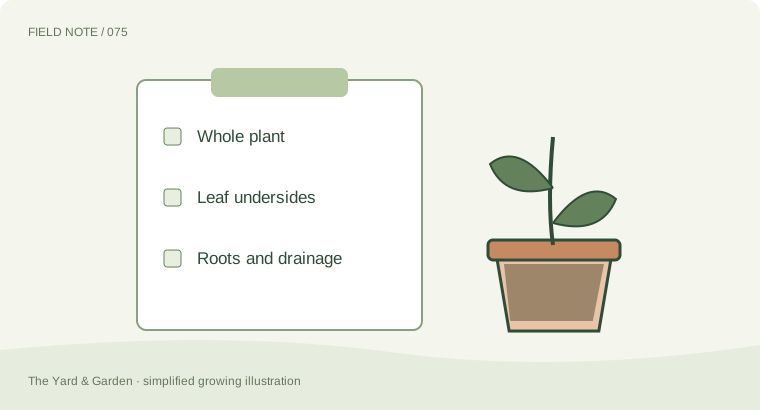
If the plant is wilting while the meter says wet, inspect drainage and the root zone. If it says dry but the mix feels wet, check contact, medium suitability, and the device itself. Contradictions are reasons to gather more information, not automatically obey the number.
A meter cannot diagnose pests, low light, or a damaged root system. It also cannot decide how much moisture a particular plant prefers. Use it to support an observation routine, especially where a deep pot is difficult to assess, while keeping the plant's requirements and actual behavior at the center of the decision.
Further guidance & source notes
- University of Minnesota Extension: Fertilizing and watering container plants
- University of Maryland Extension: Potting and repotting indoor plants
These are background resources, not an endorsement of this website. Regional instructions and the needs of your plant take priority.