The name self-watering can suggest that a planter will make every decision. In practice, it is a system you set up and monitor.
Follow the design
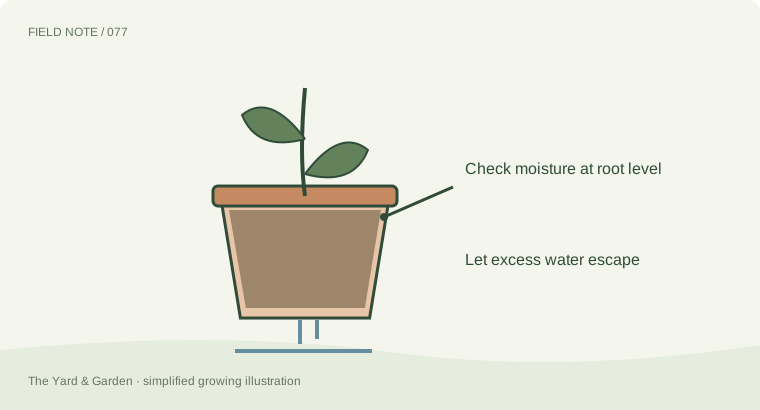
Read instructions for the reservoir, overflow, wick or contact layer, and compatible growing medium. A mix that works well in a conventional pot may behave differently above a reservoir. Some young plants need careful top watering while roots establish, depending on the system.
Do not block an overflow opening to store more water. Its position may be essential to keeping the root zone aerated. Check whether the planter is intended for indoor or outdoor use and how it handles heavy rain.
Match the plant
Not every species benefits from the same steady moisture supply. A drought-adapted plant may need a different setup. Review feeding instructions too, because nutrients and salts behave differently when water is managed through a reservoir.
Inspect moisture, plant growth, and reservoir condition regularly. Clean and maintain the system as directed. The benefit is potentially more stable water availability and fewer manual applications, not freedom from observation. If the plant struggles, investigate the interaction of roots, medium, and reservoir rather than assuming an automatic planter cannot be involved.
Further guidance & source notes
- University of Minnesota Extension: Fertilizing and watering container plants
- University of Maryland Extension: Potting and repotting indoor plants
These are background resources, not an endorsement of this website. Regional instructions and the needs of your plant take priority.