Turn a new pot over before planting. Some decorative containers have no drainage opening; others have a removable plug still in place. Either can leave roots sitting in water if you assume the pot is ready to use.
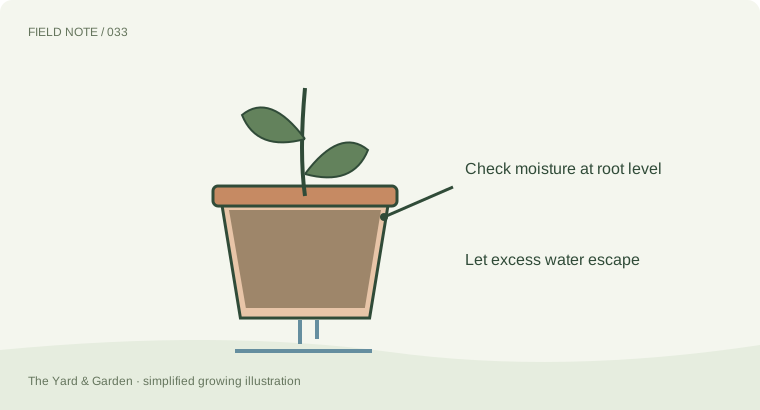
Follow the water's route
Check the opening, the base beneath it, and any saucer or outer pot. Water must be able to leave the growing container without immediately collecting around its bottom. A flat surface can sometimes obstruct an opening, so inspect rather than assuming.
If the pot is designed for drilling, follow the maker's instructions and use appropriate tools and protection. Do not attempt to drill brittle or unsuitable materials simply because a plant needs drainage. Using a separate nursery pot inside the decorative container is often easier.
Keep the opening clear
Where mix escapes through a large hole, use a small piece of suitable permeable mesh. Avoid packing the opening with a dense plug or adding a deep layer of stones as a drainage cure.
Watch the first watering. If water does not leave a thoroughly wetted pot, investigate. If it exits immediately while the root ball stays dry, that is a different problem. Drainage is about how the whole container behaves, not merely the presence of a hole in a photograph.
Further guidance & source notes
- University of Maryland Extension: Potting and repotting indoor plants
- University of Maryland Extension: Growing media for containers
These are background resources, not an endorsement of this website. Regional instructions and the needs of your plant take priority.