Before filling the watering can, spend a moment with the pot itself. Surface color gives a clue, but a finger check and the container's weight usually tell a more useful story together.
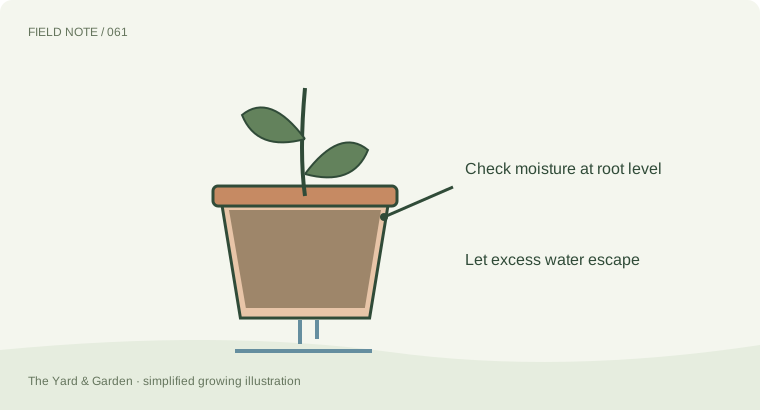
A repeatable check
- Know the plant's preferred moisture conditions; a fern and a succulent need different interpretations.
- Feel below the surface where you can do so without damaging roots. Is the mix dry, slightly damp, or distinctly wet?
- Lift a small pot carefully and compare its weight with how it feels after watering and drainage.
- Check the saucer or outer container for collected water.
With a large or deep pot, the top few centimeters cannot represent the whole profile. Take care not to repeatedly stab through roots in pursuit of a reading. A suitable probe may help, but it needs interpretation and comparison with actual conditions.
Keep the decision simple: if the root zone still has the moisture this plant needs, wait and check again. If it is becoming too dry, water in a way that reaches the roots. After a few repetitions, you will recognize the pattern of this plant in this pot. That knowledge is more useful than borrowing someone else's weekly timetable.
Further guidance & source notes
- University of Minnesota Extension: Fertilizing and watering container plants
- University of Maryland Extension: Potting and repotting indoor plants
These are background resources, not an endorsement of this website. Regional instructions and the needs of your plant take priority.