Rain, wind, and repeated foot traffic can affect a bed while nothing is growing in it. Planning the gap between plantings is part of soil care.
Choose a suitable cover
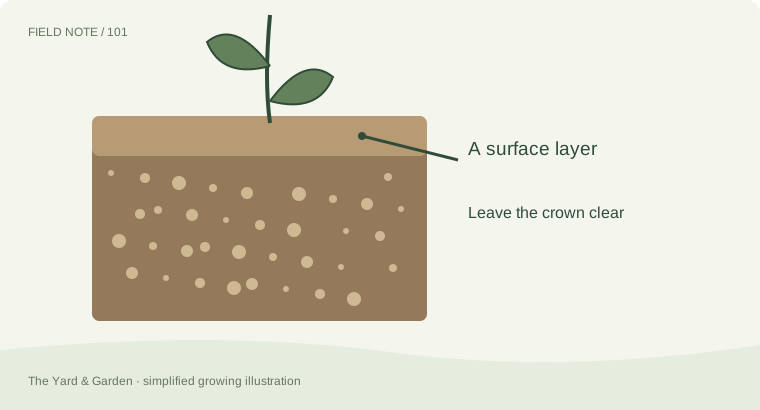
An appropriate organic mulch can protect the surface and reduce weed emergence. Where suitable, a cover crop offers another option, but it needs choosing for the season and managing before the next planting. It is not simply seed to scatter and forget.
Avoid covering persistent weeds without understanding how they regrow. Some can emerge through mulch or spread from fragments. Keep paths clear and do not walk across wet growing ground merely because it looks empty.
Think ahead to planting day
Choose a cover you can work with when the next plants are ready. A thick layer of coarse material may need moving aside for small seeds or plugs. Do not bury plant crowns while trying to preserve the surface cover.
Observe how the bed behaves after heavy rain. Surface protection can help, but it will not solve drainage problems caused by compacted subsoil or an unsuitable site. The useful habit is to regard soil as part of the garden even when the flowers are elsewhere, giving it protection and a plan rather than treating it as unused storage space.
Further guidance & source notes
- University of Minnesota Extension: Mulching for soil and garden health
- Royal Horticultural Society: Caring for soil
These are background resources, not an endorsement of this website. Regional instructions and the needs of your plant take priority.