A plant leaning toward the window is responding to the light available. Turning the pot occasionally can spread that exposure around the canopy.
Make small, consistent changes
Rotate a manageable amount during routine checks rather than repeatedly spinning the plant whenever you pass it. Notice whether new growth becomes more balanced. Keep sensitive leaves away from very hot or cold glass.
Some flowering plants respond poorly to abrupt changes in position or conditions. Follow the species' care guidance, especially when buds are developing. If the plant has a deliberately trained shape, its orientation may be part of that care.
Ask whether the location is bright enough
Rotation may reduce one-sided growth but cannot supply missing light. Long weak stems, increasingly small leaves, or a lack of expected flowers can mean the position needs reassessing.
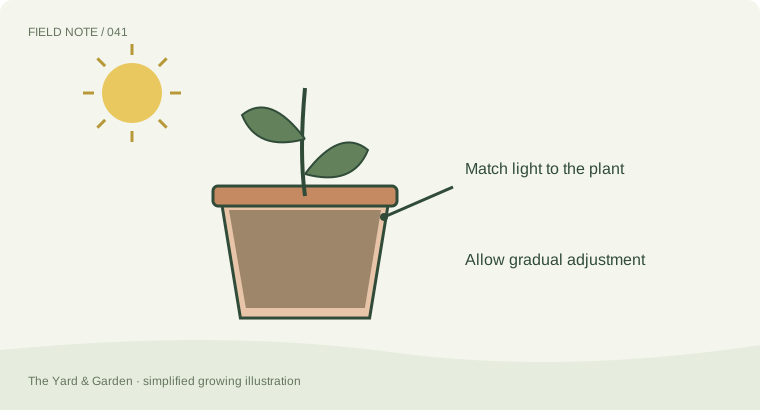
Moving a shade-acclimated plant into strong direct sun should be gradual. More light is not automatically better when the change is sudden. Keep a photograph of the plant's shape before adjusting its position. New growth over time gives you a clearer answer than inspecting the same old bent stem every morning and expecting it to become straight.
Further guidance & source notes
- University of Maryland Extension: Potting and repotting indoor plants
- University of Maryland Extension: Growing media for containers
These are background resources, not an endorsement of this website. Regional instructions and the needs of your plant take priority.